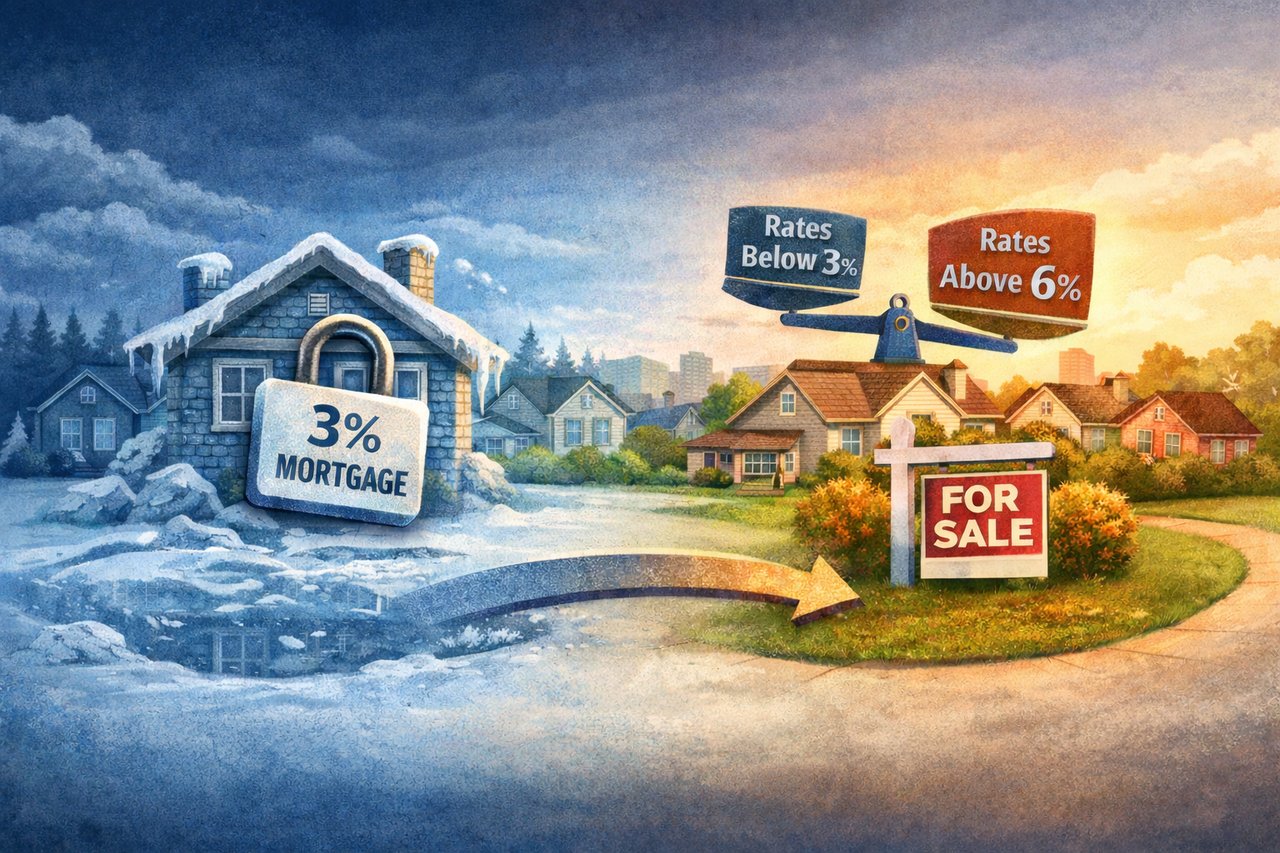
For the last few years, one invisible force has shaped nearly every real estate conversation we’ve had. Not prices. Not demand. Not even inventory. It’s been mortgage lock-in. We saw it constantly. Homeowners who would have moved in any other market chose to stay put, not because they loved their homes, but because they couldn’t imagine giving up a 3 percent mortgage for something starting with a 6. So they waited. And waited. And many segments of the market stayed frozen longer than anyone expected. But something important has started to change. Recently, the number of homeowners with mortgage rates above 6 percent surpassed those with rates below 3 percent. On its own, that sounds like a technical data point. In practice, it signals something more meaningful. The lock-in effect that’s been keeping people on the sidelines is slowly loosening.
Why This Matters More Than Headlines Suggest: For years, an ultra-low mortgage rate gave homeowners a strong reason not to move. Even when a home no longer fit their life, the tradeoff felt too expensive to justify. Giving up a great rate felt like a loss. And we know fear of loss is powerful, because the brain works roughly twice as hard to avoid a perceived loss as it does to pursue a possible gain. But life keeps moving. People change jobs. Families grow or shrink. Parents age. Daily routines evolve. Over time, the emotional cost of staying put can begin to outweigh the financial comfort of a low rate. We’re seeing more homeowners reach that point. Not suddenly. Not out of urgency. But with a clearer sense of what they actually need. Lately, we hear some version of the same thought again and again: “I know my rate is great, but this house doesn’t really work for us anymore.” The decision to sell in 2026 is shaping up to be less about waiting for the perfect mortgage environment and more about whether a home still makes sense.
This Won’t Be a Flood. It Will Be Gradual: It’s important to be clear about what this is not. This won’t be a rush of new listings. It won’t be a dramatic reset. This is a slow unwinding. Many homeowners still have favorable rates and will continue to think carefully before making a move. But each month, more sellers are deciding that waiting indefinitely for ideal conditions isn’t worth staying in a home that no longer fits. Markets don’t turn all at once. They shift gradually, one decision at a time. That’s how momentum builds.
A Market That’s Loosening, Not Falling Apart: One misconception worth clearing up is the idea that if the lock-in effect fades, prices must fall. That’s not how this works. Demand hasn’t disappeared. Construction costs remain high. Many homes don’t have mortgages at all. Location, quality, and condition still carry real weight. At the same time, as rates ease, affordability improves and more buyers can participate. Buyers benefit from more inventory and improved affordability. Sellers benefit from price stability and more consistent demand. And many sellers, of course, will also be buyers. What’s changing is movement, not value. More movement creates a healthier market. One where decisions are driven by life needs rather than financial paralysis. One where buyers and sellers can meet each other with clearer expectations.
The Bottom Line: The housing market doesn’t move on headlines. It moves on human decisions. As the lock-in effect eases, more homeowners are choosing to move based on life, not just interest rates. If you’re thinking about selling, the question isn’t whether rates will return to where they were. They won’t. The more important question is whether your home still fits your life, and whether today’s market supports a thoughtful, well-positioned move. That’s the conversation worth having.
Your trusted advisors,
Peter and Tregg